Health Science Report
Dermatology • Women's Hair Loss • Weight Loss

A Dermatologist Finally Explains Why Women Lose Hair After Rapid Weight Loss — And What Actually Stops It

She'd done everything her doctor told her. Lost the weight, took the vitamins, stayed consistent. Her hair still fell out in fistfuls. Here's what was actually missing.

Hair thinning after rapid weight loss

I want to tell you about a patient who changed the way I practice medicine.

Her name is Michelle.

She was 43 years old. She had lost 58 pounds over eight months. She had worked incredibly hard to do it — changed her entire lifestyle, her eating habits, everything.

And then, about four months after reaching her goal weight, her hair started falling out.

Not thinning gradually. Falling out in clumps.

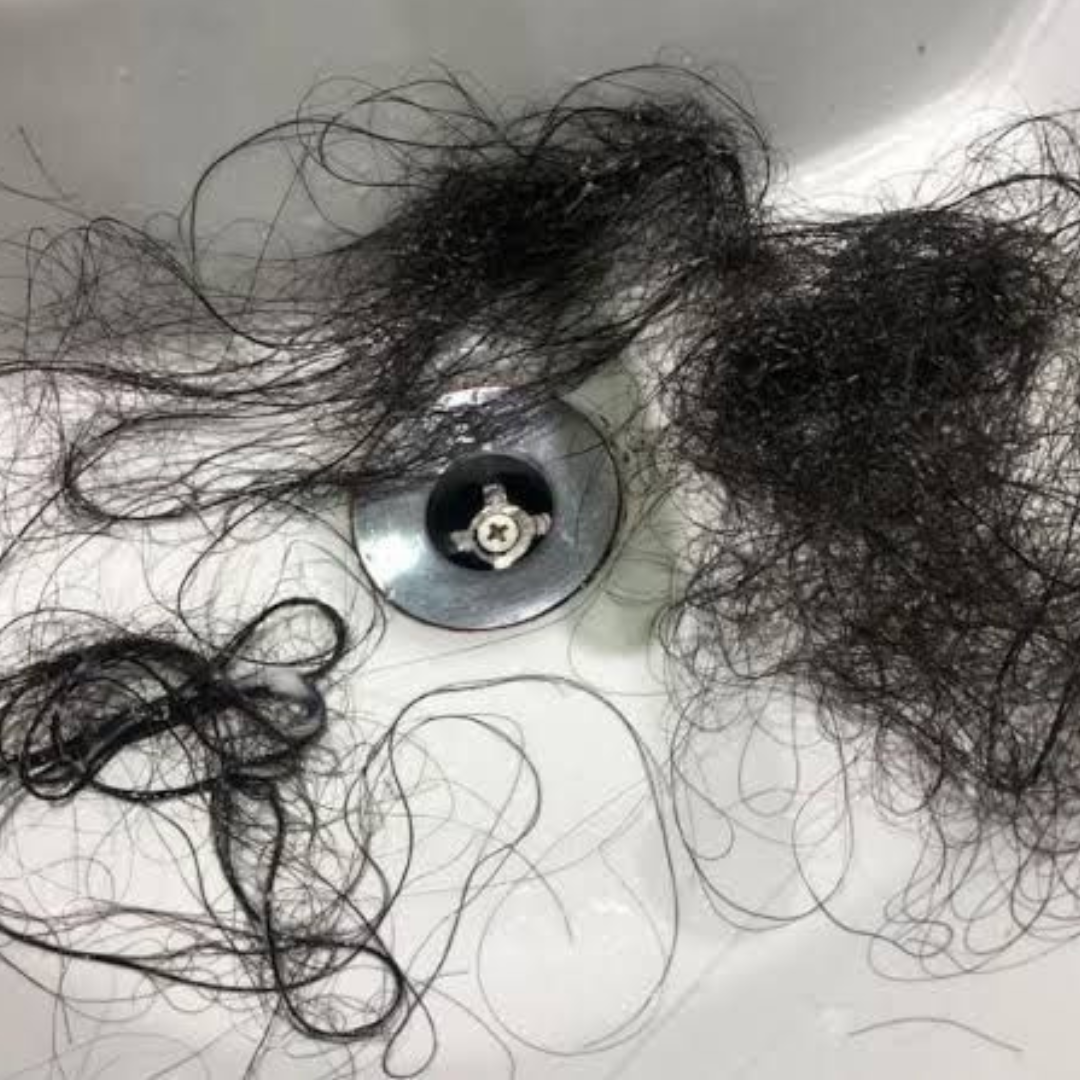
She came into my office holding a ziplock bag. Inside were the hairs she had collected from her shower drain over a single week.

It was the size of a small bird.

"I thought I was dying," she told me. "I went from the best I've ever felt to the most scared I've ever been. And nobody could tell me why."

Michelle had spent over $600 on supplements before she walked into my office.

Biotin. Collagen. An $80 bottle of a premium hair supplement. A hair serum her sister swore by. Two "hair, skin, and nails" vitamins from the pharmacy.

Nothing worked. Not one of them.

She had started showering every other day to avoid the drain. Dry shampoo wasn't a preference — it was a coping mechanism.

"I would stand in the shower and watch the clumps swirl down," she told me. "And I'd think — this is my fault. I did this to myself."

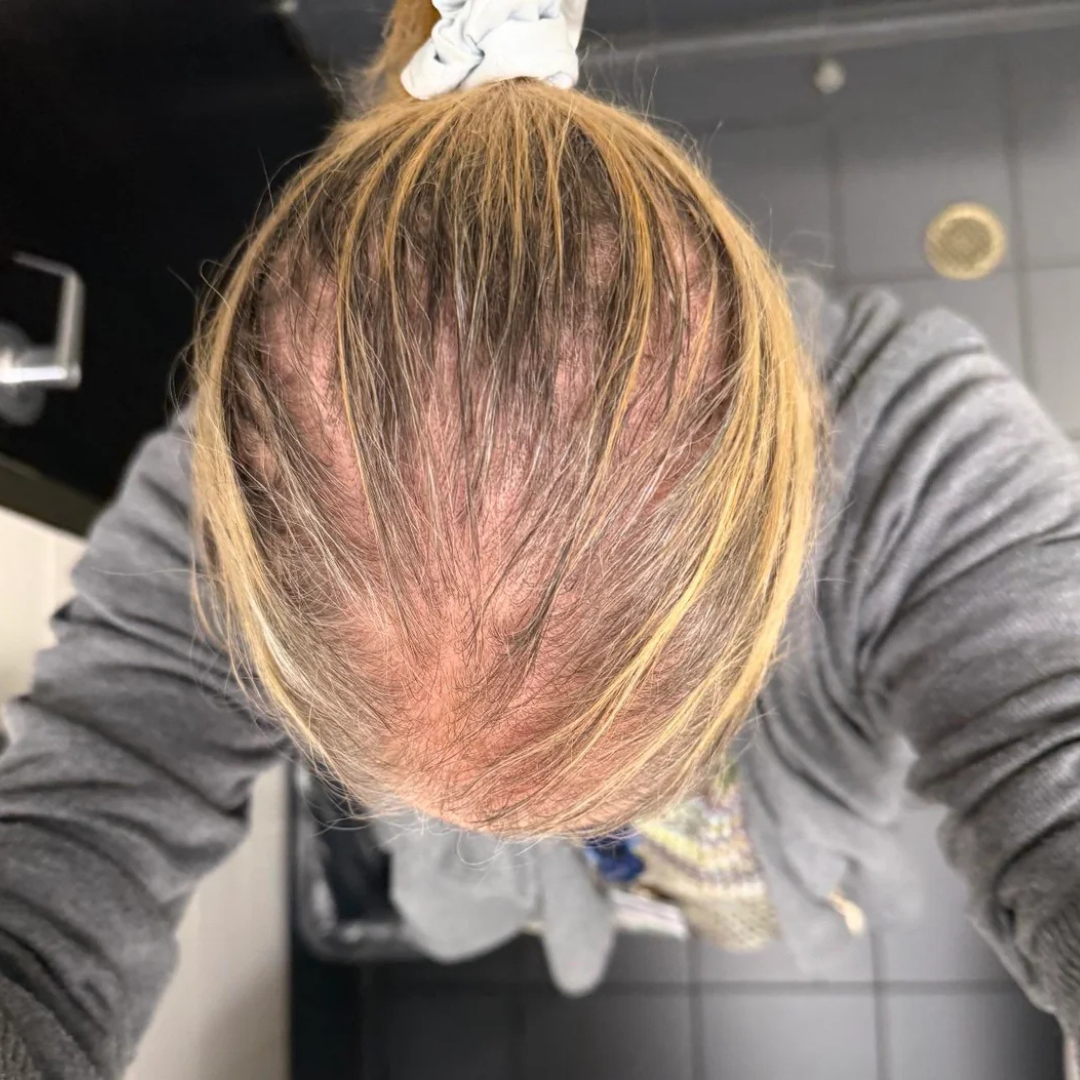
She pulled her hair into a low bun every morning to cover her temples. She hadn't been to her hairdresser in months because she didn't want anyone to see.
Her ponytail — which she used to wrap twice around an elastic — now went around four times and still felt thin.

She showed me two photos on her phone. Before and after her weight loss. Before: fuller face, full hair. After: the body she had worked so hard for, and far less hair than she started with.

"I would have taken my old hair and my old body," she said quietly. "I don't know how to explain that to someone who hasn't been through it."

Hair loss in the shower — what Michelle saw every morning

Why Everything She'd Tried Had Failed

When Michelle listed the supplements she'd been taking, I felt something I wasn't expecting.

Guilt.

Not because she had the wrong information. Because the entire industry had given her the wrong information. And I had been part of that industry for fourteen years without questioning it.

Here is what nobody tells women going through this: there are two completely different types of female hair loss. And the supplements most women are buying — including the expensive ones — were designed for only one of them.

Type 1: Genetic thinning. DHT — a hormone derived from testosterone — slowly miniaturizes hair follicles over years. Nutrafol, Viviscal, and most hair vitamins are formulated around this mechanism. They block DHT. For genetic thinning, they can work.

Type 2: Post-weight-loss hair loss. This has nothing to do with DHT. Nothing to do with hormones. It is a nutrient problem — specifically, what happens to your body's nutrient supply when it goes into survival mode.

Michelle didn't have a DHT problem.

She had a starvation problem.

And $600 worth of the wrong supplements were never going to fix that.

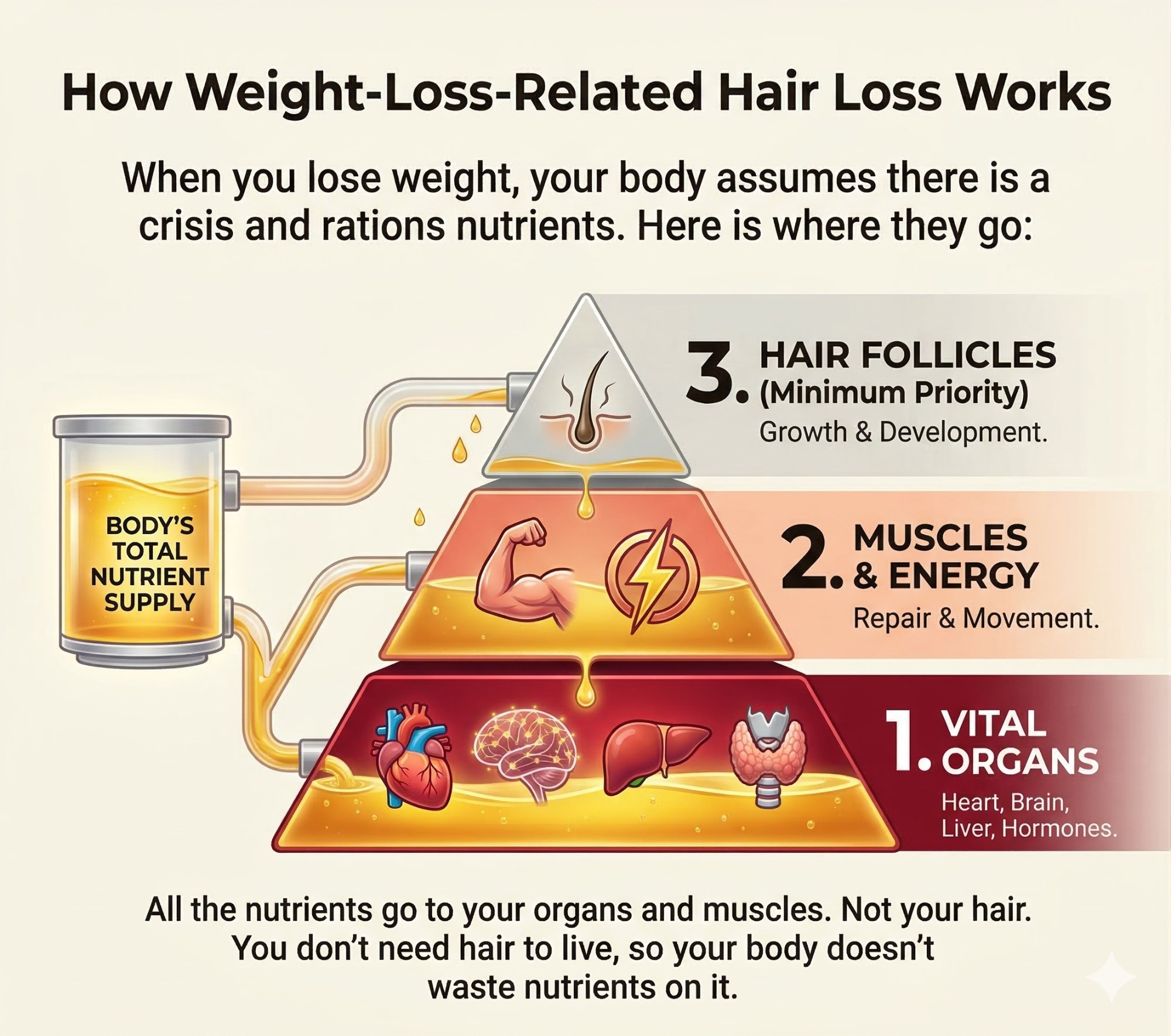
How weight-loss related hair loss works — your body rations nutrients away from hair follicles

What Was Actually Happening Inside Her Body

When you lose weight rapidly, your body doesn't understand that you're trying to get healthier.

It understands one thing: fewer calories are coming in.

And it responds the way it has been programmed to respond for 200,000 years of human evolution.

It goes into survival mode. It starts rationing.

Your body has a strict priority list for where nutrients go. At the top: your heart, your brain, your lungs, your liver. The organs that keep you alive.

At the very bottom of that list?

Your hair.

Hair is biologically non-essential. In a survival scenario, your body cuts it off without hesitation to protect the organs that matter.

So it quietly reroutes the nutrients your follicles need — iron, zinc, folate, vitamin D — away from your scalp and toward your vital organs.

Your follicles stop receiving what they need. They shut down. They enter what dermatologists call telogen effluvium — the shedding phase.

This is why the hair loss typically starts 3–6 months after the weight loss, not during it. By the time she's watching clumps go down the drain, the starvation started months ago.

And this is why labs come back "normal."

Blood tests measure circulating levels — what's in the bloodstream. They don't measure what's happening at the follicle. A woman can have normal iron in her blood and still have iron-depleted follicles. Her doctor tells her everything looks fine. She walks out with no answers.

Michelle had heard that from two different doctors before she came to see me.

"They both said my labs were normal," she told me. "One of them suggested I try biotin."

That's why the biotin didn't work.

That's why the collagen didn't work.

That's why the $80 hair supplement her doctor suggested didn't work.

They were built to fix a hormonal problem. Michelle didn't have a hormonal problem. She had a rationing problem. And nothing on the market was built to fix it.

At least — that's what I believed until a colleague sent me a formulation she'd been quietly recommending to her own patients.

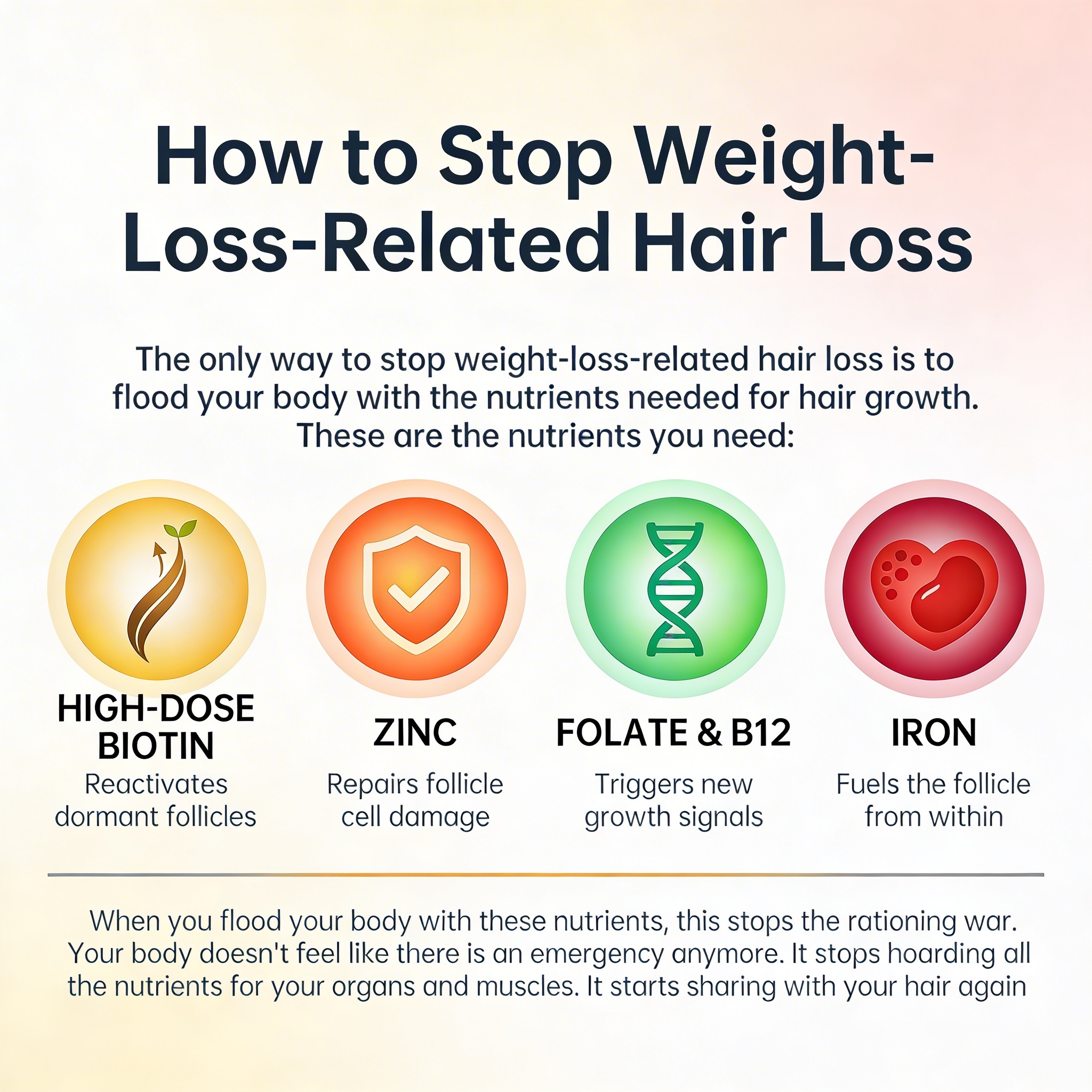
The formula built specifically for post-weight-loss hair loss

The Formula That Was Actually Built for This

I'll be honest: I was skeptical.

I've watched supplement trends come and go for fourteen years. Most of them are biotin with a premium label and a clever name.

But when my colleague — a women's health specialist — sent me the formulation breakdown, I stopped scrolling.

It was called FORMA™ Essential Hair Nutrients Formula. Marketed specifically for women experiencing hair loss after rapid weight loss.

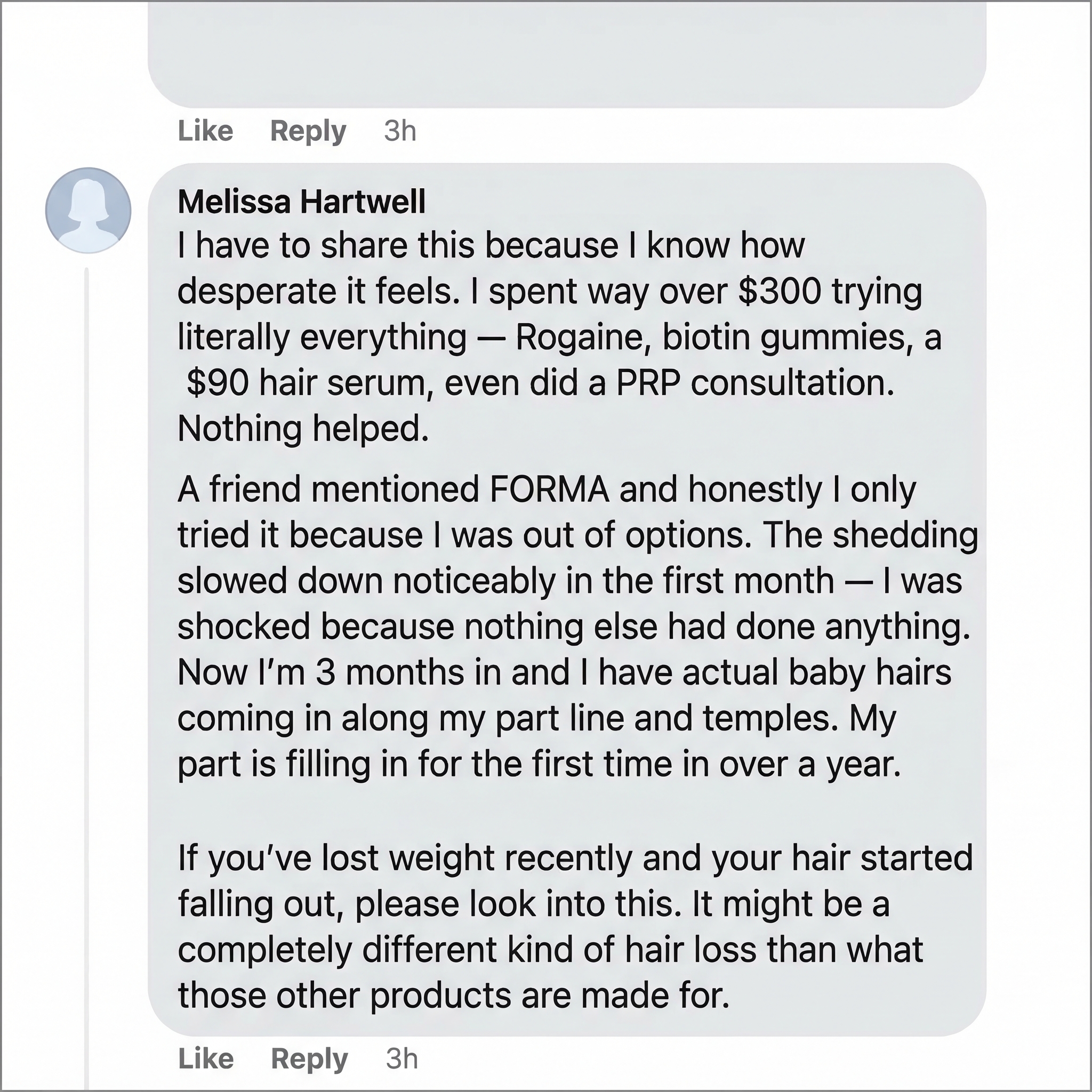
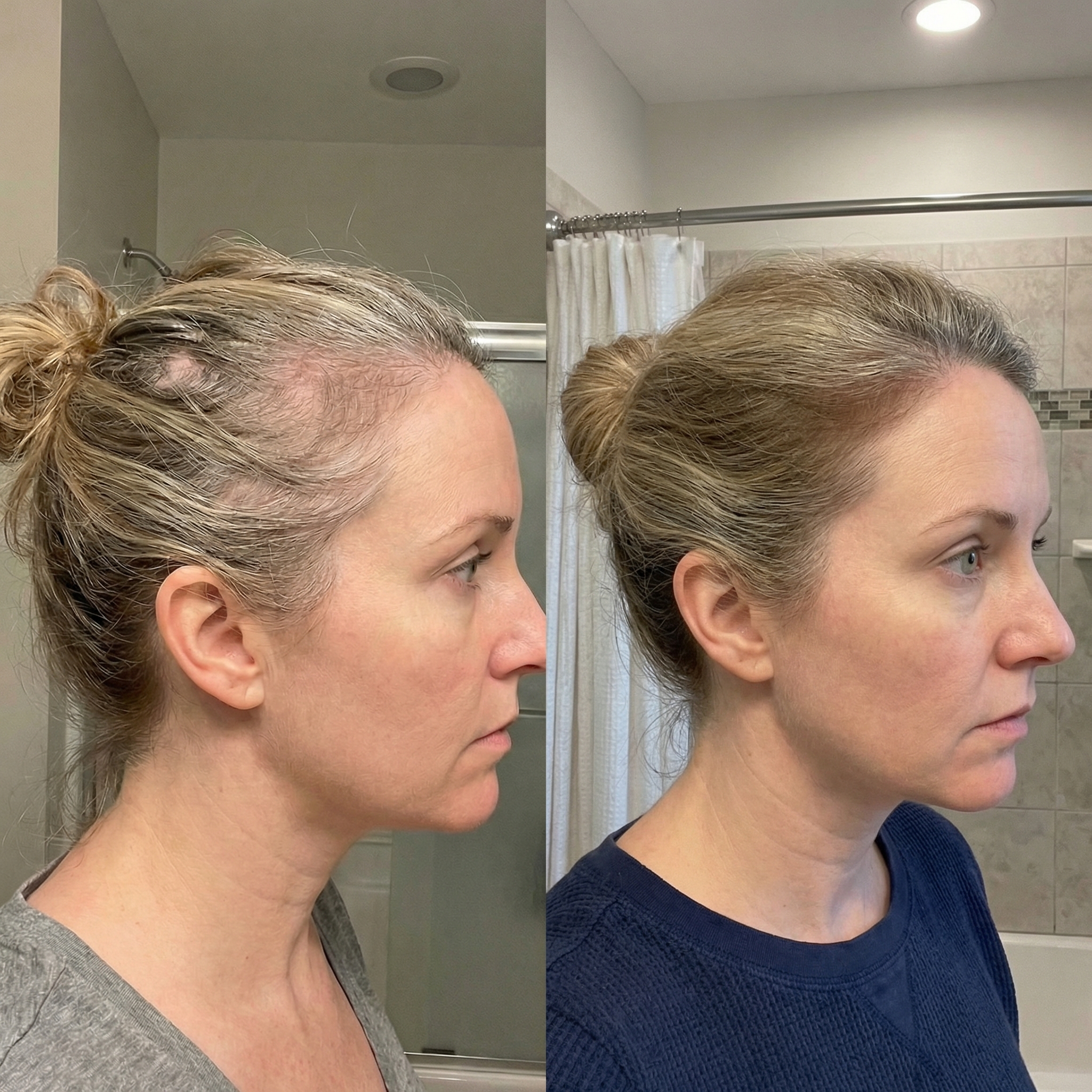
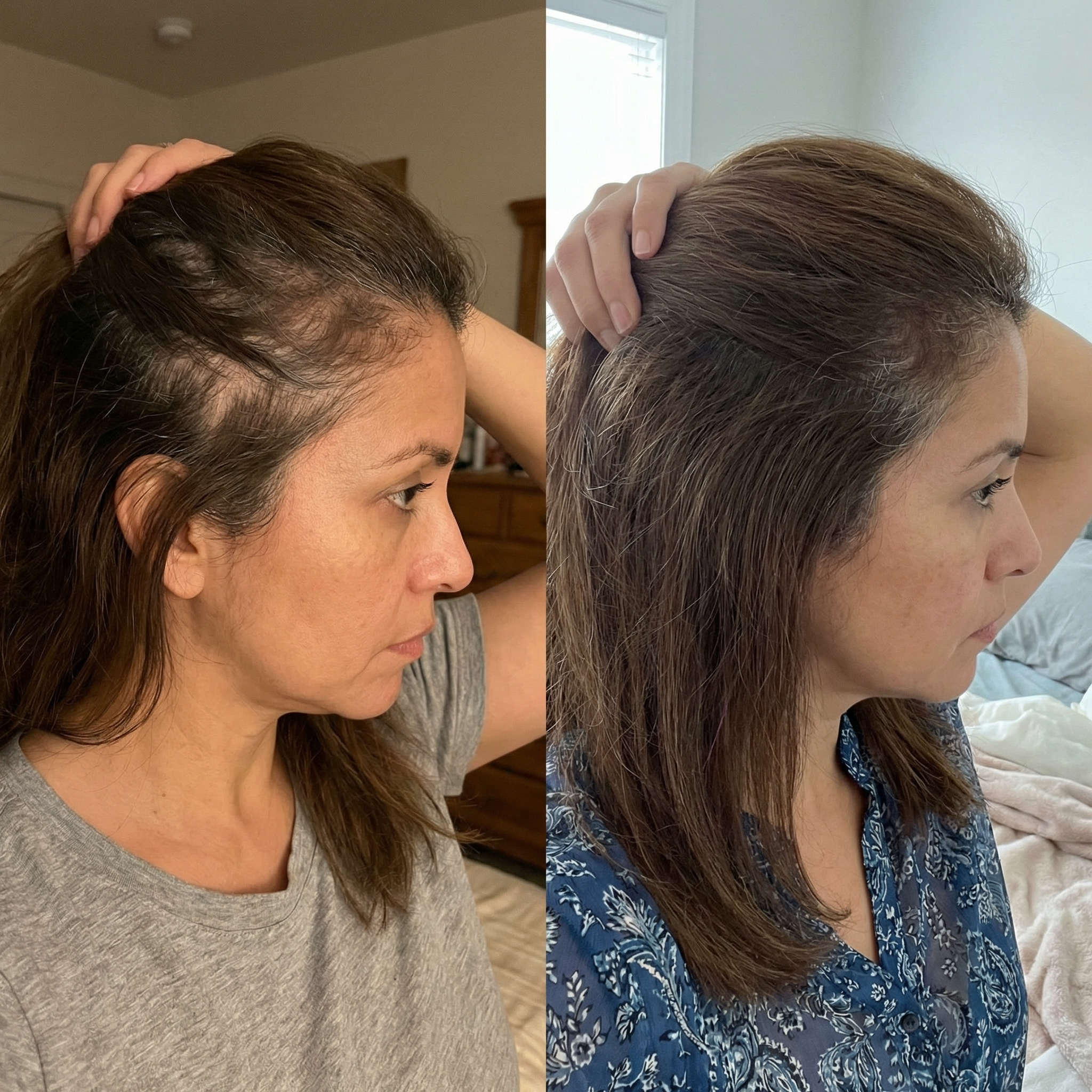
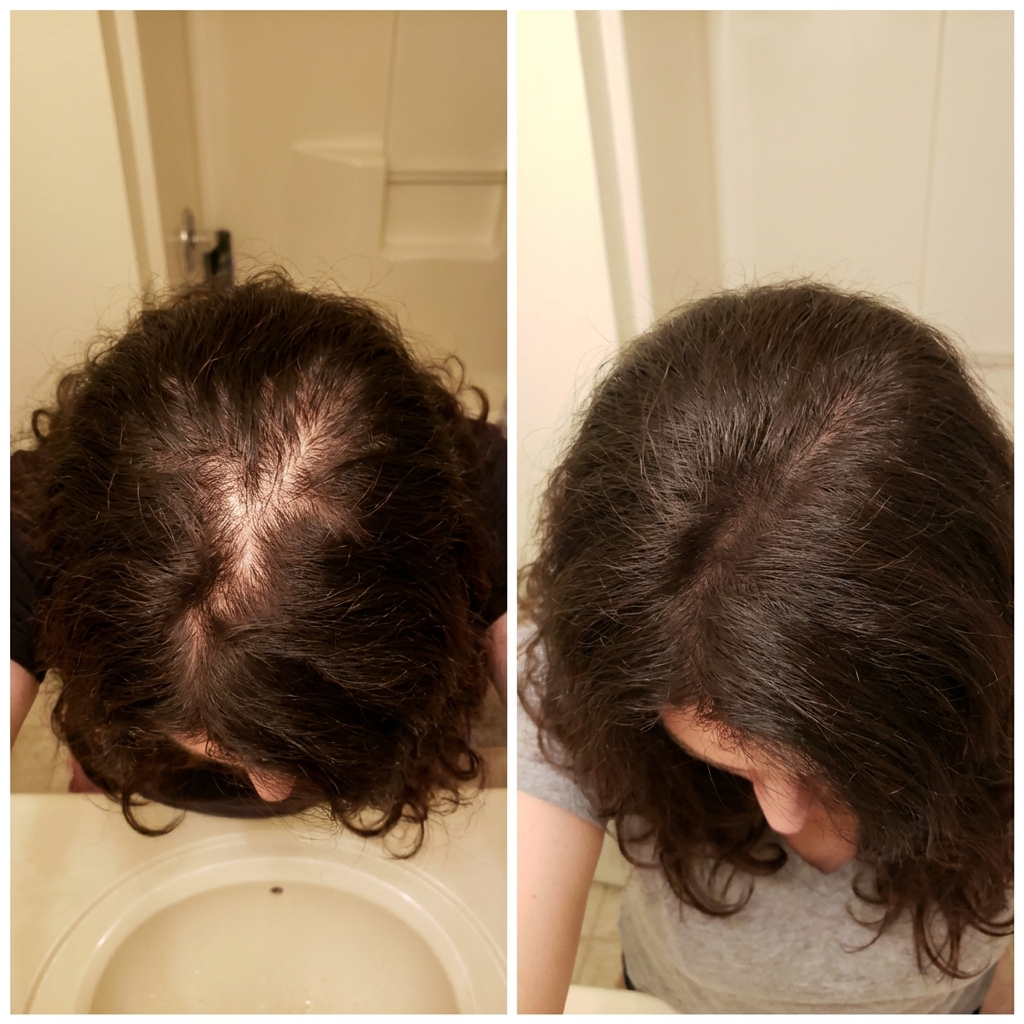
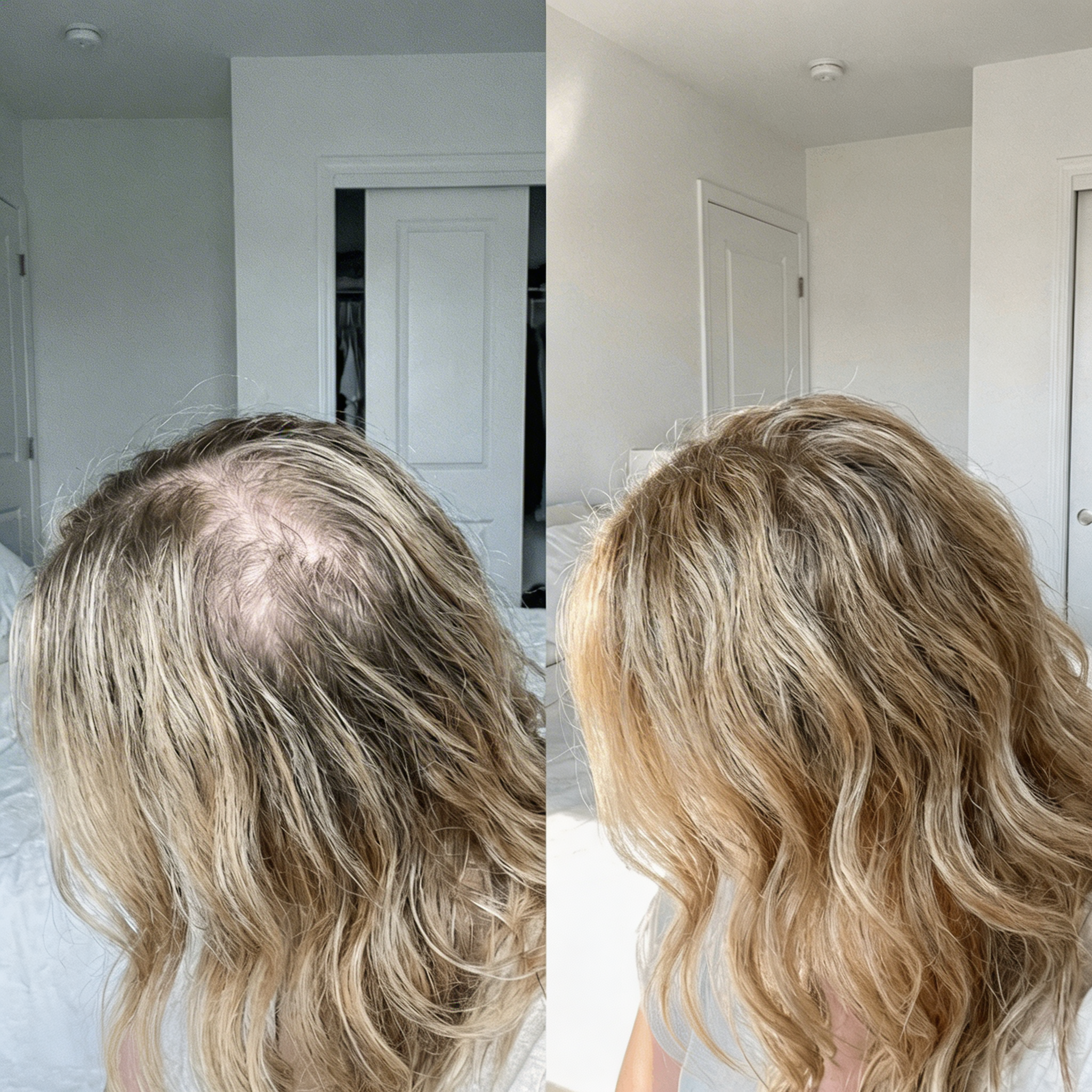
FORMA customer results — post-weight-loss hair regrowth

What was different wasn't just the ingredient list. It was the philosophy behind it.

Every other supplement I'd reviewed was built around DHT. FORMA was built around a completely different premise: what if post-weight-loss hair loss isn't a hormonal problem at all — what if it's a supply problem? End the starvation. Restart the growth cycle.

FORMA works in two phases. The first phase floods the body with every nutrient weight loss commonly depletes — covering all the bases so your body doesn't have to guess what's missing.

The most important piece is Iron and Vitamin C together. Without Vitamin C, iron barely absorbs — most of it passes right through you. FORMA pairs them because that's the only way the iron actually works.

The second phase restarts the growth cycle — signaling dormant follicles to wake up and re-enter the growing phase. Not just stopping the shedding. Actually bringing the hair back.

Two capsules every morning. That's the entire protocol.

I introduced Michelle to FORMA in November. I told her to give it 90 days before we reassessed.

Results timeline — what women experience on FORMA month by month

What Happened Over the Next Six Months

Michelle texted me about two weeks in. Not about her hair. About her nails.

"I know this sounds weird," she wrote. "But my nails are growing faster than they ever have. Is that connected?"

I told her yes — and that it was exactly what I'd hoped to see.

Hair and nails share the same nutrient pathways. Nails grow far faster than hair, which means they show you — weeks before your hair can — whether a formula is absorbing systemically. Harder, faster-growing nails within 14–28 days mean the nutrients are reaching where they need to go.

Her body was finally getting what it had been missing.

Weeks 4–6: The shedding slowed. Not stopped — slowed. She went from dreading the shower to cautiously hopeful. "I'm still losing some," she texted. "But the drain looks normal again for the first time in months."

Week 12: Baby hairs. A thin line of them along her hairline — barely visible unless you were looking. She called me. I could hear her crying before she said a word. "They're there," she said. "They're actually there."

Week 16: Her crown and temples started filling in. The part she had been hiding from photos for eight months was visibly narrower. Her hairdresser — the one she'd been avoiding — asked if she'd done something different. She hadn't been back in almost a year.

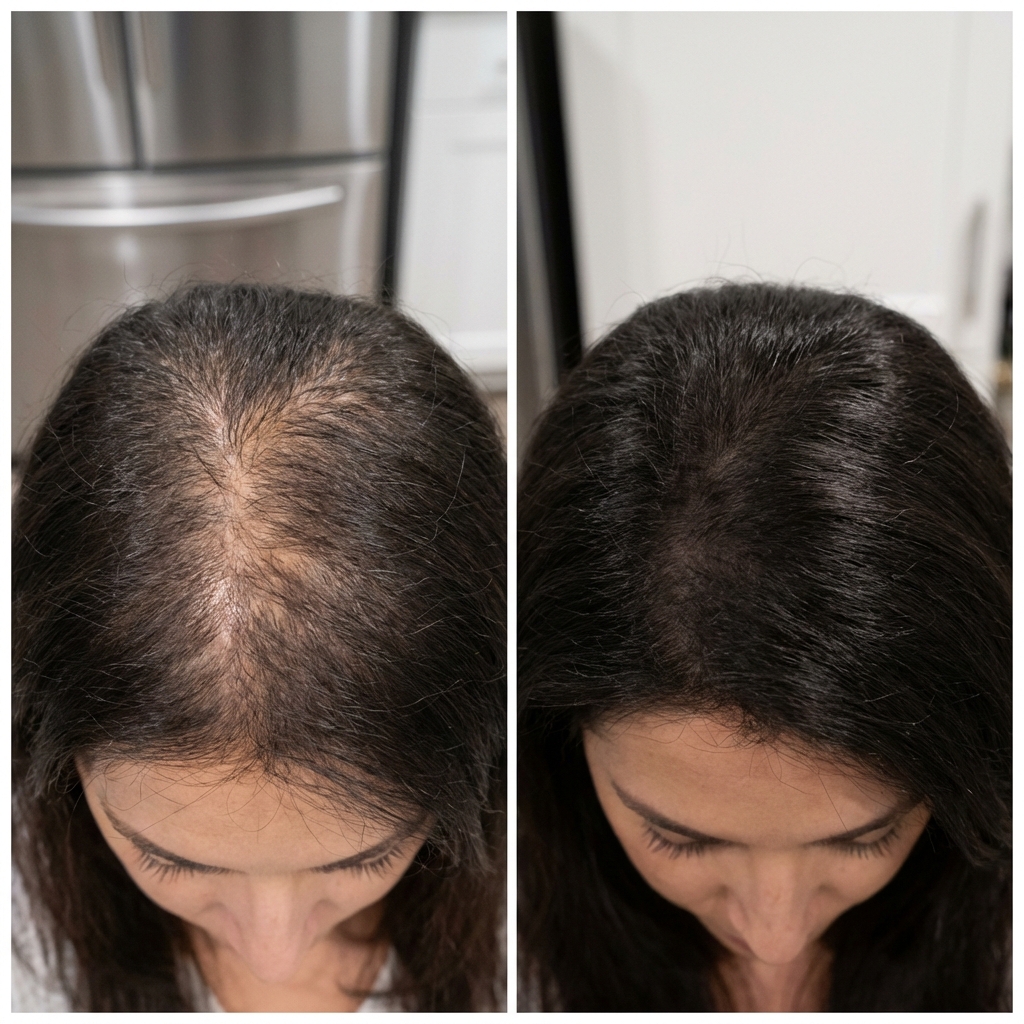
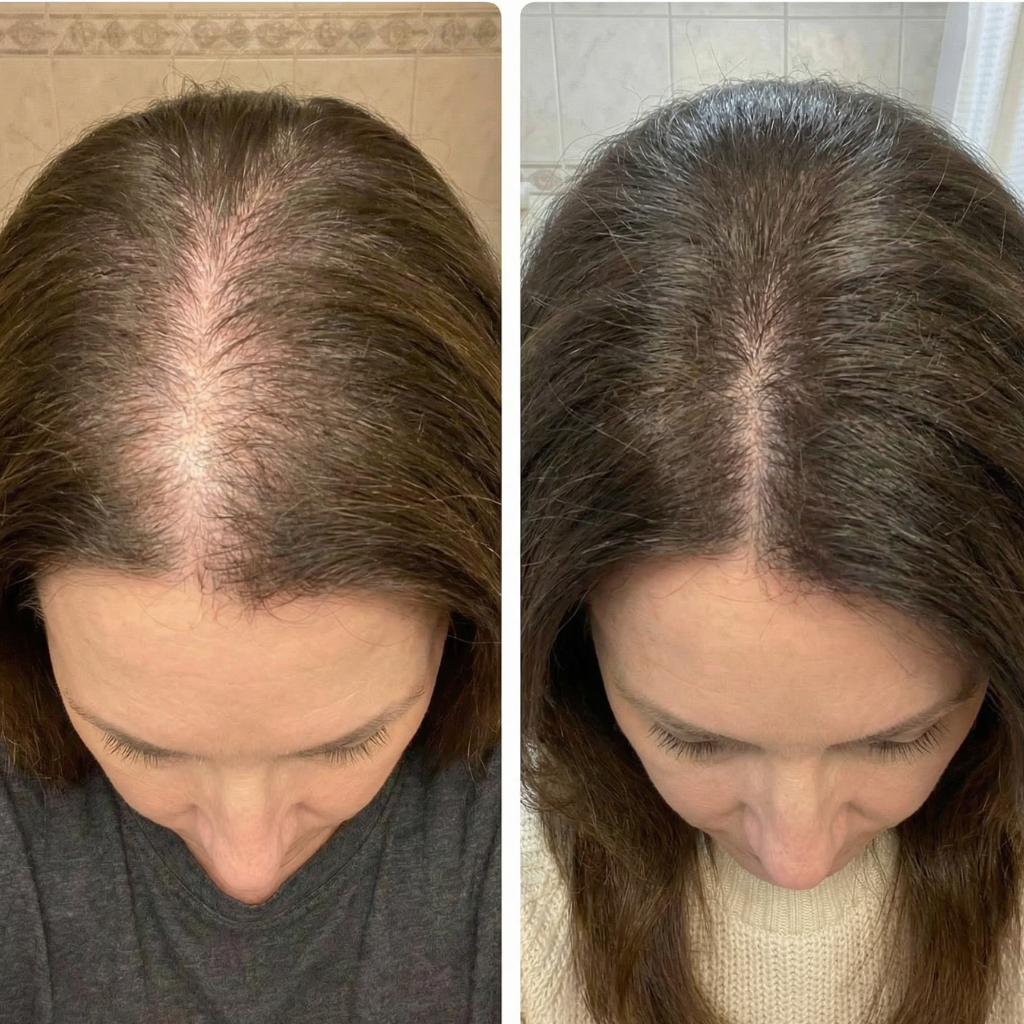
Before and after — crown filling back in after FORMA

Week 20: Michelle sent me a photo from her daughter's birthday party. She wasn't wearing a hat. She wasn't angled away from the camera. She was just in the photo — smiling, hair down, from any direction she wanted.

"I finally have both," she wrote. "The body and the hair. I didn't think I'd ever be able to say that."

"What Happens If I Stop Taking It?"

This was the first thing Michelle asked when she started seeing results. It's the first thing every patient asks.

They've been burned before. They're afraid of building a dependency — afraid that if they stop, they end up right back where they started.

Here is what I tell them.

Telogen effluvium is not caused by eating less. It's caused by the transition of eating less — the panic period, when your body doesn't yet know if this is a short-term famine or a permanent change.

Once you reach your goal weight and stabilize, your body adapts. A smaller body needs fewer nutrients — what you're eating now is enough for who you are now.

The emergency is over. The rationing stops.

Think of FORMA like a cast on a broken arm.

You don't wear a cast forever. You wear it long enough for the bone to heal. Then you take it off — and everything works on its own.

FORMA does the same thing for your follicles. It bridges the gap between when your body panicked and when it finally felt safe again. Once that bridge is crossed, you don't need it.

FORMA doesn't create a dependency. It ends a panic.

What I Tell Every Patient Who Asks

After spending over $600 on things that didn't work, Michelle spent $29 on something that did.

Over 40 patients have come through my practice with post-weight-loss hair loss and gone on to try FORMA. The arc is almost always the same — the timeline, the milestones, the relief.

I'm sharing this not as an advertisement. I'm sharing it because I spent too many years telling women their labs were fine and sending them home with nothing.

If you're experiencing hair loss after rapid weight loss — if your labs are "normal" and nothing has worked — this is the formula I'd tell you to try.

Not because it's the most expensive. Because it's the only one built for the actual problem.

I'd get the 6-month supply — that's the only way to guarantee the telogen effluvium never comes back. If you go through the full cycle and don't see a difference, they refund every penny.

Check Availability →

Here are some of the women I've seen come through my practice — and some who found FORMA on their own:

Before and After
I genuinely thought I was going bald
Rachel T., 38

“This is a little embarrassing to write but I was honestly starting to look at wigs. I lost 28 lbs and about 3 months later I was losing SO much hair. I tried two different biotin supplements, a hair growth serum, even did a PRP consultation. Nothing made a difference. A friend sent me an article about weight loss hair loss being totally different than regular hair loss and that's when I found FORMA. I'm 5 months in now. My crown is filling back in and I barely have hair on my pillow in the morning anymore. Wish I had found this sooner.”

Before and After
Month 2 was when I became a believer
Michelle P., 47

“I'm not usually one to leave reviews but I felt like I had to for this one. Lost weight and watched my hair disappear for months. Started FORMA not really expecting much. Month 1 — significantly less shedding. Month 2 — noticeably less coming out in the shower. Like a lot less. Month 3 — I can see little short hairs at my part line that weren't there before. I don't know the science behind why this works when regular biotin didn't but I don't really care. It works.”

Before and After
I used to cry getting ready in the morning
Carol A., 53

“After I lost weight my hair loss got so bad that getting ready in the morning became something I dreaded. I would find so much hair in my brush, in the sink, on the floor. My confidence was really low. I started FORMA because I had nothing to lose. Two months in the shedding started slowing. Four months in my crown is visibly fuller. I feel like myself again. I'm not exaggerating when I say this changed my quality of life.”

Before and After
Took progress photos and I'm SO glad I did
Jennifer W., 49

“My sister made me take monthly crown photos so we'd have proof. At the time I thought it was silly. Now I'm really glad she made me do it because looking at month 1 vs month 4 is wild. You can't always see the change day to day but the comparison is undeniable. My part is so much less visible now. I sent the photos to my sister and she cried.”

Before and After
Doctors told me it was hormones. It wasn't.
Angela M., 43

“I went to two different doctors about my hair loss after I lost weight and both said it was probably hormonal. It wasn't. I eventually found an article explaining telogen effluvium and it described my situation exactly. That article mentioned FORMA. I ordered it and four months later I have visible regrowth at my temples and part line. Wish a doctor had pointed me in this direction instead of making me figure it out myself.”

Before and After
Short review: it actually works
Kristin H., 36

“Lost 32 lbs, hair started falling out 3 months later, tried regular biotin for 4 months with zero results, switched to FORMA, shedding slowed down within 6 weeks, new growth visible by month 3. That's the whole story. If your hair started falling out after you lost weight, just get this.”